 Loading... Please wait...
Our Products
Join our newsletter
Acacia Baileyana


Price:
$110.00
(including GST)
Common Name:
COOTAMUNDRA WATTLE

PLEASE NOTE: Orders are by full tray only. Each tray contains 40 plants. When ordering, please choose how many trays you would like.
WHAT IT LOOKS LIKE:
-
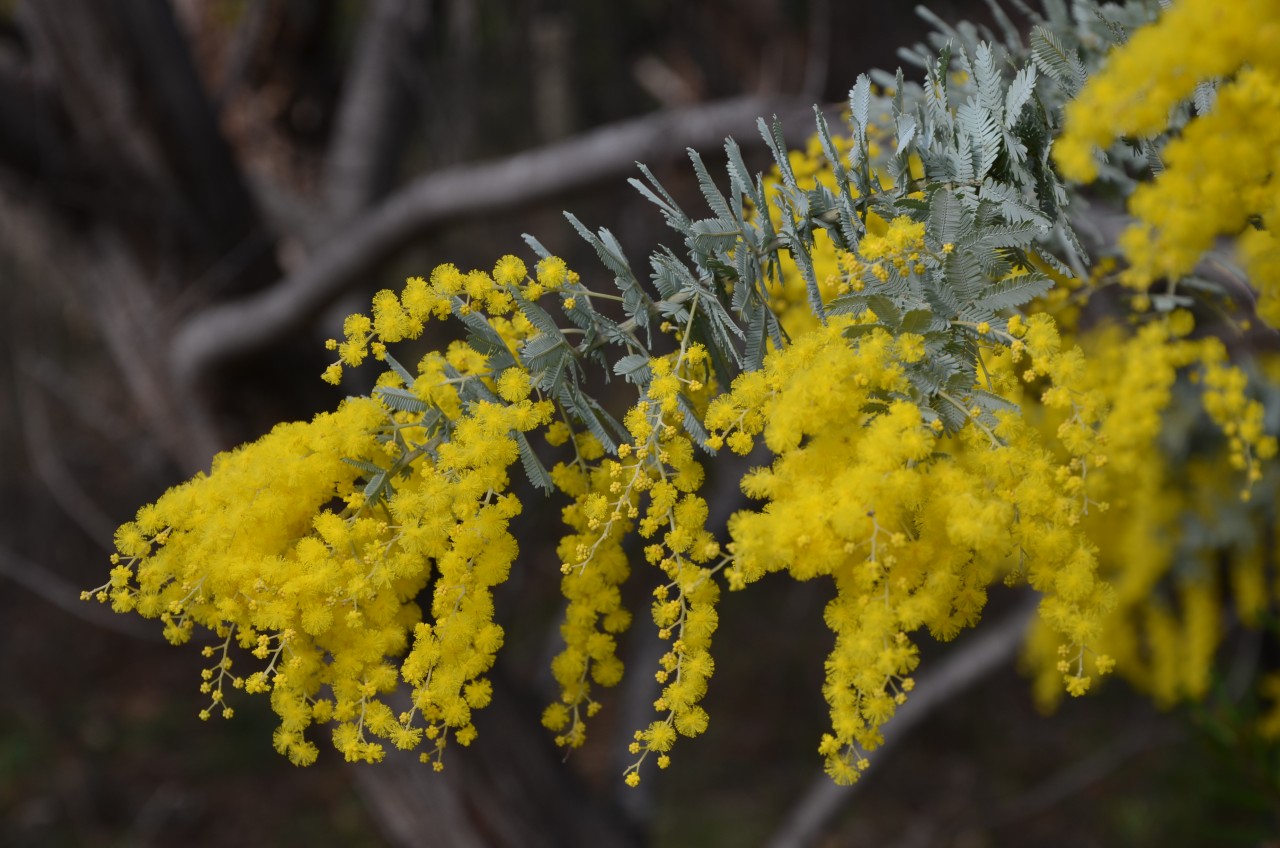
1. Usually a small tree from 3 to 10 metres high.2. Retains the fern-like, bipinnate foliage throughout their lives (in most other species, the bipinnate foliage is replaced by flattened stems called phyllodes).3. 'Leaves' are up to 30 mm long and silvery-grey in colour.4. The plant has smooth, greyish brown bark.5. The bright yellow flower clusters are globular in shape and are produced in the leaf axils in late winter to spring.Usually a small tree from 3 to 10 metres high.
- Retains the fern-like, bipinnate foliage throughout their lives (in most other species, the bipinnate foliage is replaced by flattened stems called phyllodes).
- 'Leaves' are up to 30 mm long and silvery-grey in colour; young foliage is purple in colour.
- The plant has smooth, greyish brown bark.
- The bright yellow flower clusters are globular in shape and are produced in the leaf axils in late winter to spring.
WHERE IT GROWS & WHY:
- Hardy plant suitable for a wide range of climates and soils, provided they are reasonably well drained, and is best grown in full sun.
- The plant has a tendency to become naturalised and is now considered to be an environmental weed in many areas; for this reason, it should not be grown in areas anywhere near natural bushland.
MANAGEMENT/SIGNIFICANCE:
- Fast growing and relatively short lived and suitable as a screen plant.
- Attracts bees and seed eating birds.
- The flowers are very showy and eye-catching.
- Grows in full sun to light shade, in well-drained to moderate moist soils.
- Will withstand frost.
- Tend to self-seed, so it is best not to plant it near areas of natural bushland to prevent it from establishing unwanted populations.
Image Source: Flower - John Jennings from Australia, CC BY 2.0, via Wikimedia Commons
Image Source: Plant - Thennicke, CC BY-SA 4.0, via Wikimedia Commons
- Home
- Acacia / Wattles
- Acacia Baileyana